Four Ideas Shaping the Next Era of Healthcare

I spent this past week at the Nashville Health Care Council listening to healthcare leaders discuss consolidation, partnerships, rural sustainability, technology, workforce challenges and, inevitably, artificial intelligence.
The conversations covered a lot of ground, but four themes continued to surface for me.
- Scale matters. But scale does not always require ownership.
- Fewer Partners. Deeper Relationships. Larger Expectations.
- AI Is Moving from Strategy to Utility.
- From Large Language Models to Direct to Consumer Small Language Models
Scale matters. But scale does not always require ownership.
For years, much of the conversation around scale in healthcare has centered on traditional M&A. And there is no question that acquisitions and consolidation will remain an important part of the landscape, particularly as organizations face increasing financial, operational and workforce pressures.
But I think the conversation is getting broader.
Instead of simply asking, “Who should we acquire?” or “Should we sell?”, organizations are increasingly asking: What capabilities do we need, and what is the best way to access them?
Sometimes the answer will be ownership. In other situations, it may be a joint venture, an MSO, shared services, a strategic affiliation or another partnership structure entirely.
One way I’ve started to frame these decisions is through four questions: Capital, Capability, Control and Community.
- Capital: What investment does the organization need to remain sustainable and competitive?
- Capability: What do we need to be good at, and what would be difficult, expensive or inefficient to build ourselves?
- Control: What decisions, relationships and functions truly need to remain locally controlled?
- Community: What needs to be protected for the patients, physicians, employees and communities the organization serves?
I like these questions because they move the conversation away from simply asking whether an organization should remain independent or pursue a transaction.
They force a more important discussion around what the organization actually needs to be successful. And depending on the answers, the right structure may look very different.
This becomes particularly important in rural healthcare.
For some rural hospitals, access to capital or the need for significant operational transformation may ultimately make joining a larger health system the right path. But that is not the situation for every organization.
A hospital may be clinically strong, financially viable and deeply trusted within its community while still lacking the scale necessary to build sophisticated technology, revenue cycle, analytics, procurement, workforce or administrative capabilities.
In those situations, the more interesting question becomes: Can the organization access the benefits of scale without giving up everything that makes it successful locally?
That is where MSOs, shared-service models, joint ventures and other strategic partnerships become increasingly interesting. It is not independence for independence’s sake. And it is not consolidation for consolidation’s sake. It is about finding the structure that creates the greatest opportunity for long-term sustainability.
Fewer Partners. Deeper Relationships. Larger Expectations.
Another theme from the week that stayed with me was the changing philosophy around partnerships.
David Dill of Lifepoint spoke about the importance of being intentional about partnerships, essentially working with fewer partners but going deeper with those partners. That resonated with me.
Healthcare organizations have accumulated enormous complexity over the years: vendors, point solutions, interfaces, consulting relationships, technology platforms and outsourcing arrangements. I spoke with one IT executive who told me he has over 400+ different applications and vendors his health system is working with.
At some point, the ecosystem designed to solve problems can become another source of complexity itself. The next phase may require organizations to become much more intentional about who they choose to work with.
Instead of continuously adding vendors, organizations may increasingly look for a smaller number of trusted partners that understand the business, share accountability and are capable of solving multiple problems over time.
That has significant implications for health systems, rural hospitals, MSOs, technology companies and firms like ours that work alongside healthcare organizations.
The expectation will increasingly be more than simply delivering a service. It will be to understand the organization, create measurable value, help solve problems as they evolve and to have skin in the game so to speak.
AI Is Moving From Strategy to Utility
Artificial intelligence was, unsurprisingly, a consistent topic throughout the week. But what I found encouraging was that the discussion seems to be becoming more practical. The conversation is shifting away from:
“What is our AI strategy?”
toward:
“Where are people doing repetitive or administrative work that technology could handle better?”
That distinction matters.
Ambient clinical documentation is a good example.
The value is not simply that the technology is impressive. The value is that it can potentially remove administrative burden and give clinicians more time to focus on patients.
The real opportunity is capacity. Where can technology give time back to clinicians, operators and administrators so they can focus on the work that requires human judgment, relationships and expertise?
From Large Language Models to Direct to Consumer Small Language Models
One of the more interesting conversations I had during the week was around the potential role of small language models, or SLMs.
Most of the attention today is focused on increasingly powerful large language models capable of answering questions across an enormous range of subjects. But healthcare may also create an opportunity for something much more focused.
Imagine an AI model designed around a specific individual, condition or area of healthcare. Imagine that model built, trained and run directly for you and even by you as a patient.
During one conversation, an executive gave a simple personal example. He had noticed that a glass of white wine could cause his blood sugar to respond very differently than a glass of red wine.
On the surface, that is a small observation. But it led to a much bigger conversation.
What happens when an individual has access to a focused AI model that can understand relevant elements of their health information, A1C trends, medications, activity, nutrition and personal responses, all while also being grounded in appropriate clinical evidence?
Rather than asking a broad model a general healthcare question, the individual could potentially interact with something designed around the information most relevant to their own healthcare journey. That begins to move AI toward another interesting frontier: personalized, direct-to-consumer healthcare tools.
We are still early, and there are significant questions around clinical oversight, privacy, data governance, accuracy and regulation that will have to be addressed. But the direction is worth watching because Healthcare AI may not remain primarily an enterprise tool used by hospitals, physicians and insurers.
Over time, consumers may increasingly have access to highly personalized tools that help them better understand their health, prepare for conversations with their clinicians and navigate their own healthcare journey. That could and would create an entirely new category of direct-to-consumer healthcare products.
The Bigger Takeaway
Stepping back, my biggest takeaway from the week was not about M&A, rural healthcare, partnerships or AI individually. It was about how healthcare organizations assemble capabilities. The work ahead is increasingly about deciding:
- What should we own?
- What should we build?
- What should we share?
- What should we access through partners?
- And what must remain local?
Then comes the harder part: making all of those pieces actually work together and having the proper oversight in place.
My experience working across healthcare operations, integrations, M&A, revenue cycle and rural healthcare has reinforced that strategy and execution cannot be separated.
A transaction can look great on paper. A partnership can make perfect strategic sense. A technology platform can have tremendous potential. But ultimately, value is created when those decisions translate into better operations, stronger organizations and better experiences for patients and communities.
Coming out of this week, I believe that capability is only going to become more important. Because the next era of healthcare scale may not belong to the organizations that simply own the most.
It may belong to the organizations that are best at assembling the right capabilities, going deeper with the right partners and turning all of it into meaningful value for the people and communities they serve.
About the Author
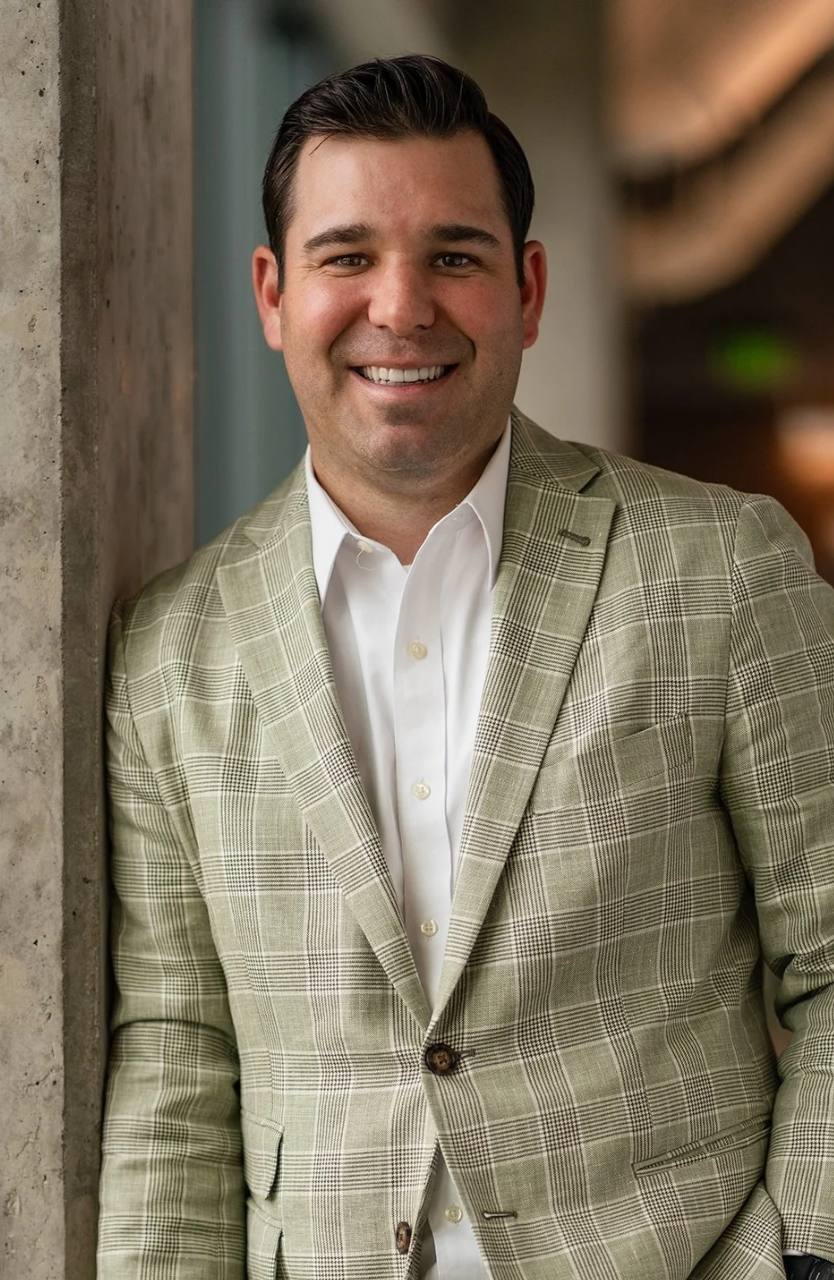
Don Murray is a healthcare executive and M&A integration leader known for steering complex transitions that drive measurable growth, operational readiness, and financial performance. With Thrivence, Don leads large-scale healthcare transformation programs specializing in M&A integration, transition services and revenue cycle modernization. His work reflects Thrivence’s mission to transform leaders, teams, and organizations through clarity, execution, and measurable impact.
Recently, Don oversaw one of the nation’s largest healthcare transition initiatives, directing the separation of over $1.2B+ in assets across 25+ hospitals, 9 separate buyers, and 600+ FTEs. He advised executive leadership and board memebrs on TSA revenue recognition, forecasting, and financial oversight while managing multiple TSA exits and service extensions across IT and revenue cycle functions. His leadership has standardized governance, reduced operational risk, and generated over $35 million in revenue. He also led the insourcing of RCM and IT operations, supported C-suite go-to-market strategy development, and renegotiated 350+ vendor contracts, achieving $3.5M+ in cost avoidance while maintaining uninterrupted service delivery.